Muddy Creek and other West-Side Tributaries of the Ohio River
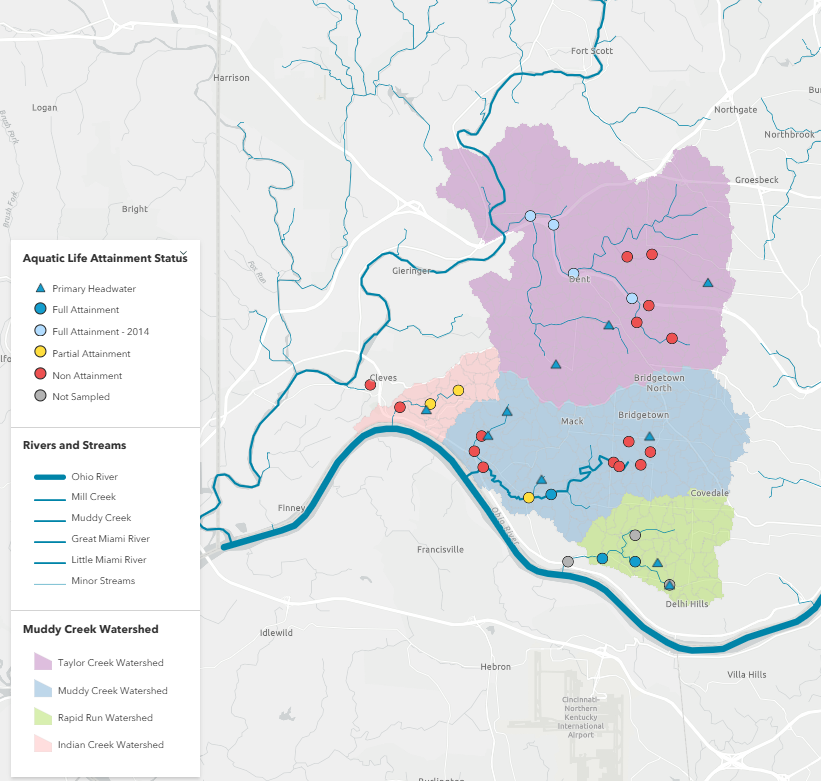
There is widespread impairment in Muddy Creek and other west-side tributaries of the Ohio River, even in watersheds (Indian Creek and Taylor Creek) where there are no combined sewer overflows (CSOs). Incremental improvements in water quality have occurred since 2014.
WEST SIDE WATER QUALITY STORY MAP
Visit our interactive West Side Water Quality Story Map to learn more about Muddy Creek, Indian Creek, Rapid Run, and Taylor Creek in a visual format.
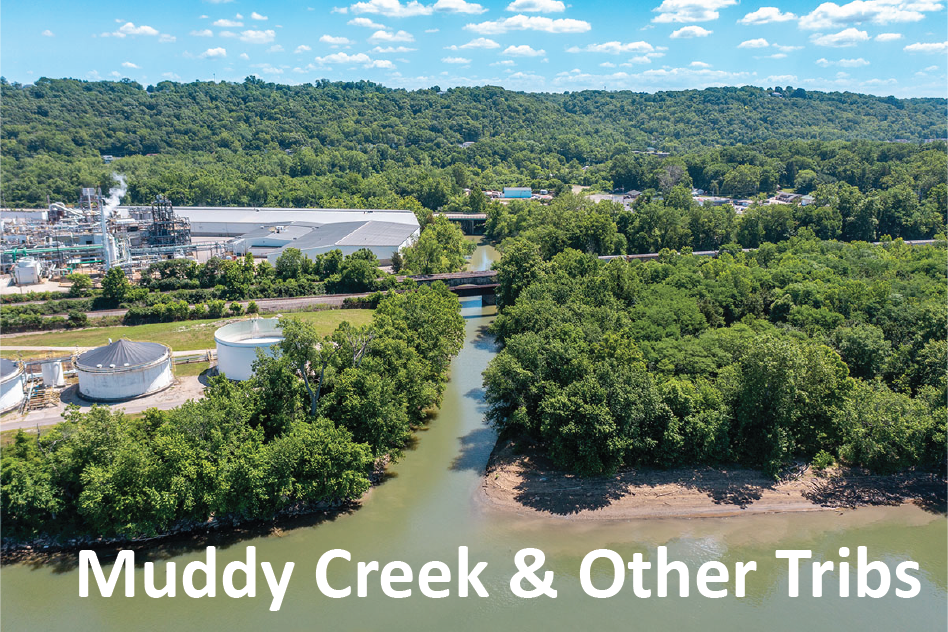
MUDDY CREEK & OTHER TRIBS WATER QUALITY REPORTS
MSD monitors water quality and aquatic habit in the Muddy Creek & other tributaries every four to five years, partnering with the Midwest Biodiversity Institute (MBI) to perform comprehensive biological, chemical, and physical sampling and analysis. A benchmarking (baseline) round of sampling was conducted in 2011-2014. A second round of sampling was conducted in 2016-2019. The third round of water quality sampling was conducted 2021-2023.
Please see the water quality reports for Muddy Creek and other Ohio River tributaries below:
- Muddy Creek and other tributaries (2023)
- Muddy Creek and other tributaries (2018)
- Ohio River and Tributaries, including Muddy Creek (2014)
SUMMARY OF 2024 MUDDY CREEK AND OTHER WEST-SIDE TRIBUTARIES STUDY
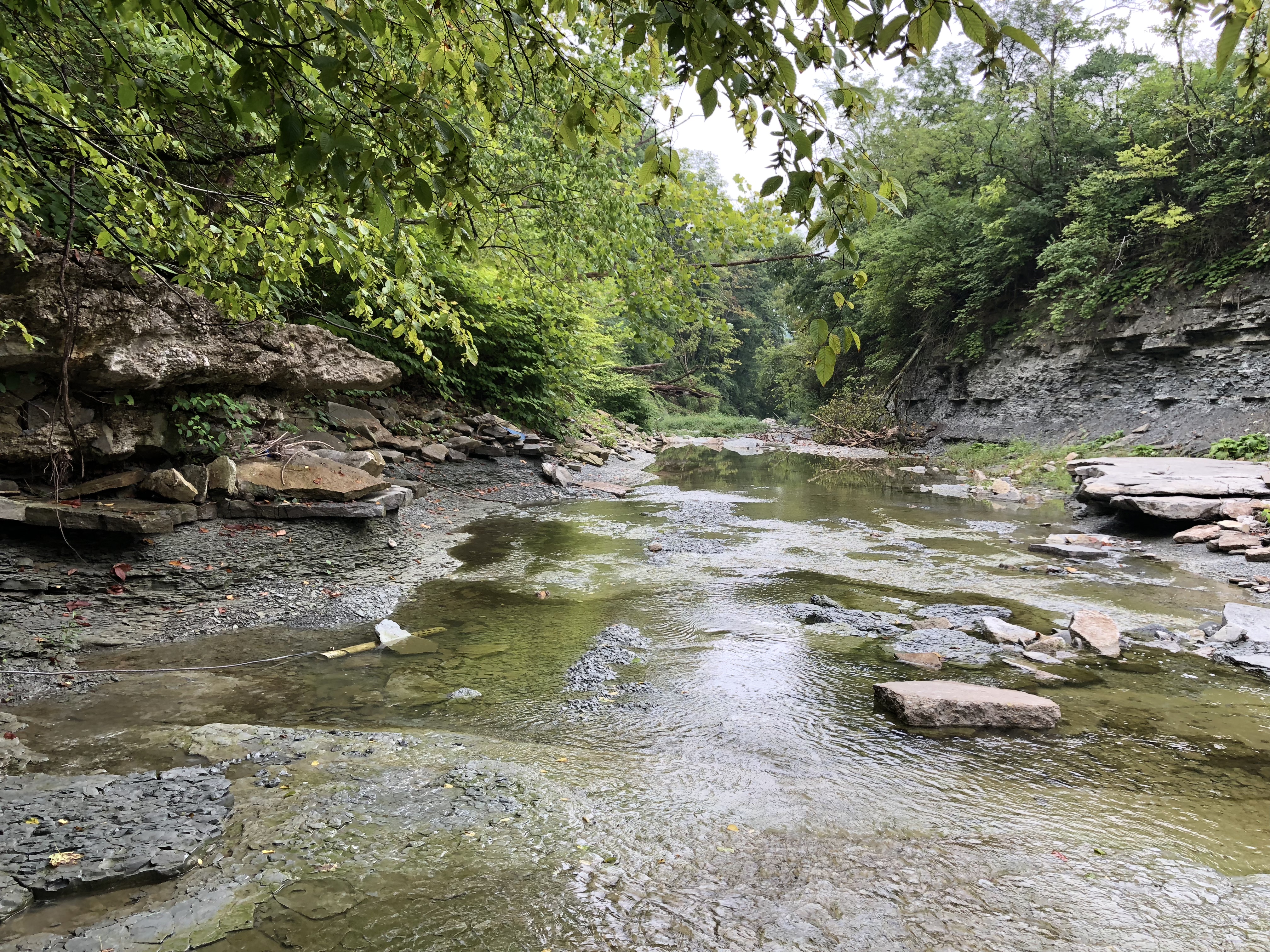
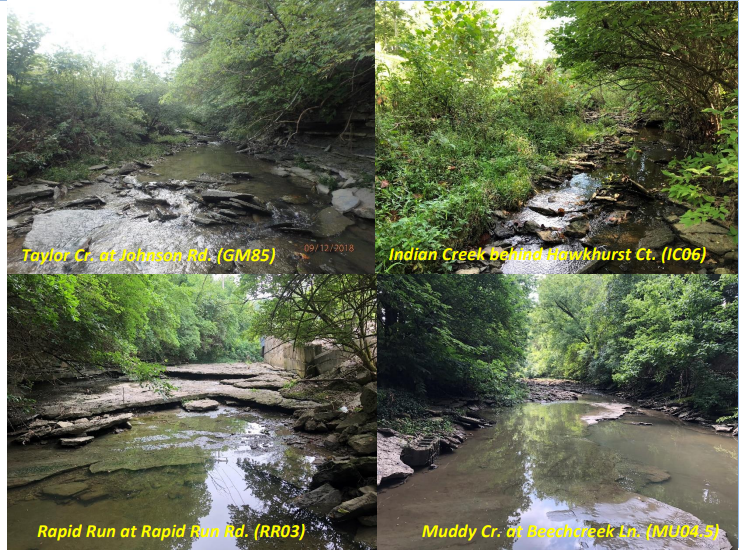
Here are the highlights from the most recent (2023) water quality study of Muddy Creek and other Ohio River tributaries:
- Of 21 sites evaluated in the four watersheds (Muddy Creek, Rapid Run, Indian Creek, and Taylor Creek), 71% are in non-attainment of their aquatic life use (ALU).
- Muddy Creek: Of 10 sites sampled in the Muddy Creek watershed, one in the mainstem (MU03) was in full attainment of its warmwater habitat (WWH) and one in the mainstem (MU02) was in partial attainment, with eight locations in the mainstem and tributaries in non-attainment. This is an overall improvement from 2018 when all of the mainstem sites were in non-attainment. The installation of MSD's Werk & Westbourne Enhanced High-Rate Treatment Facility (EHRT) in late 2018 and an upgrade to MSD's Muddy and Westbourne HRT facility in 2019-2020, which have reduced sewer overflows into Muddy Creek, have contributed to water quality improvements.
- Rapid Run: Of two sites sampled in the Rapid Run watershed, both were in full attainment of their limited resource water (LRW) habitat.
- Indian Creek: Of four sites sampled in the Indian Creek watershed, two were in partial attainment of their WHW habitat and two were in non-attainment.
- Taylor Creek: Of five sites sampled in the Taylor Creek watershed, all were in non-attainment of their WHW habitat.
- 11 different fish species were observed in the Muddy Creek, Indian Creek, and Taylor Creek watersheds, with the predominant species being Central Stoneroller, Blacknose Dace, Creek Chub, and Bluntnose Minnow. Rapid Run, which is a limited resource water habitat, had the least diversity, with five different fish species.
- All of the watersheds are impaired to some degree by E. coli bacteria for primary and secondary contact recreation.
- Muddy Creek had 4 of 14 sites that met one of two criteria (but not both) for primary contact recreation.
- The Rapid Run watershed is designated as secondary contact recreation only, with 3 of 7 sites meeting both criteria.
- The Indian Creek watershed had 1 of 5 sites that met both criteria for primary contact recreation.
- The Taylor watershed had 3 of 8 sites that met one of two criteria (but not both) for primary contact recreation
MSD hosted a public Water Quality Forum on December 11, 2024, to present the results of the 2023 water quality study. For more information, please view the resources below:
View the 2024 Water Quality Forum presentation
View the 2024 Water Quality Forum Meeting (2 hours)